Run and compare your location studies
Assess every site on the same grid — access, demand, competition, property cost — and keep all your areas for the next study.
Who it is for, and how often
A single location study can be done by hand. It is the next ones that get expensive.
Network development: several candidates, several towns
You assess files continuously. The question is not "is this unit any good" but "which of these four comes out on top" — which means measuring them the same way.
Consultant: several clients, one method
Every assignment starts from a different address, but the method does not change. Reusing the same catchment logic and the same indicators makes your studies comparable and defensible in front of a lender.
Retail chain: the same criteria applied everywhere
Your areas stay saved and your siting criteria apply identically from one opening to the next. A file assessed last year is still there when a unit next door comes free.
The four layers of a study
None of these four layers decides on its own. It is their overlap on one perimeter that supports a go or no-go.
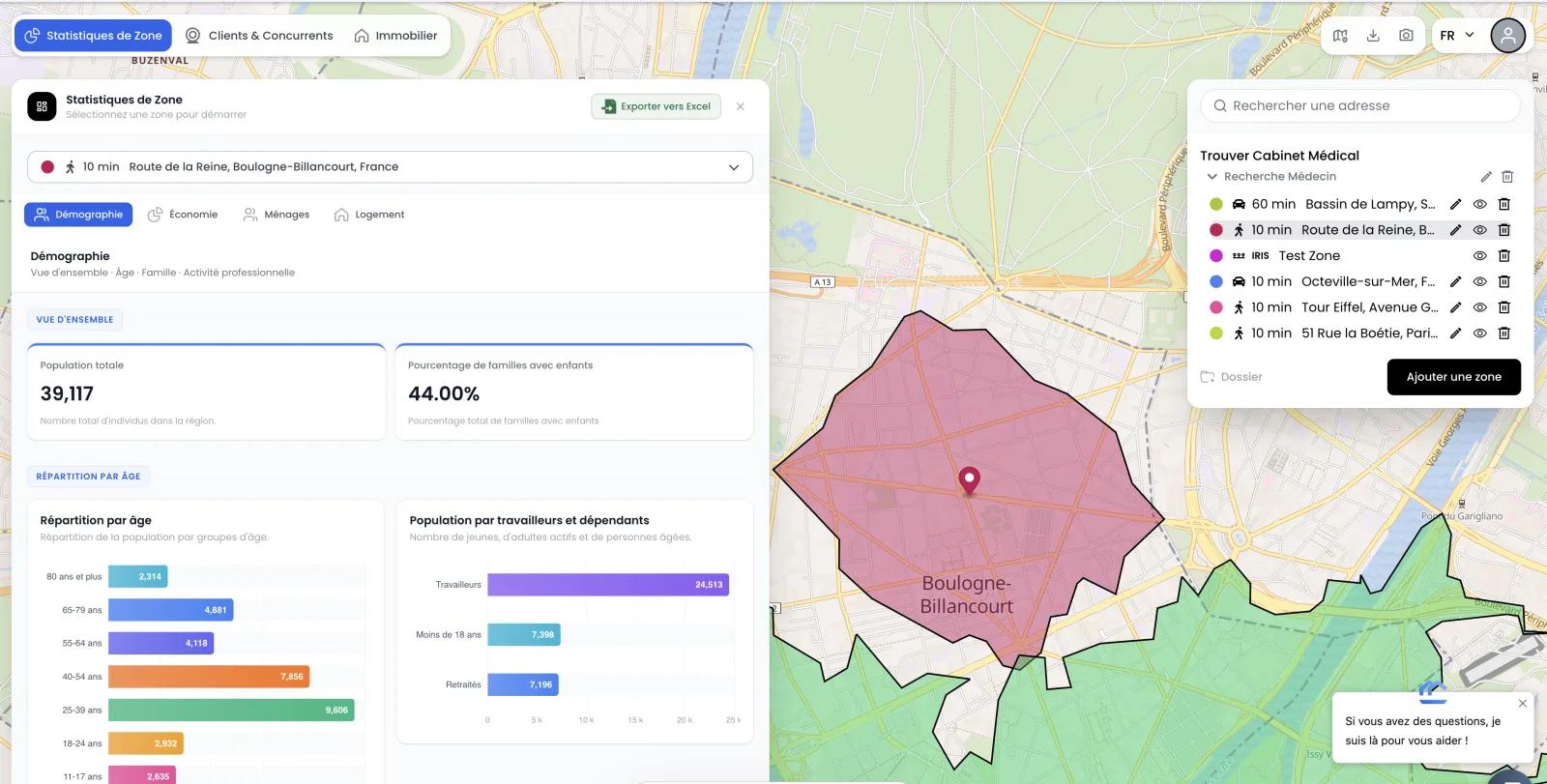
- Étape 1
Access: draw the real catchment area
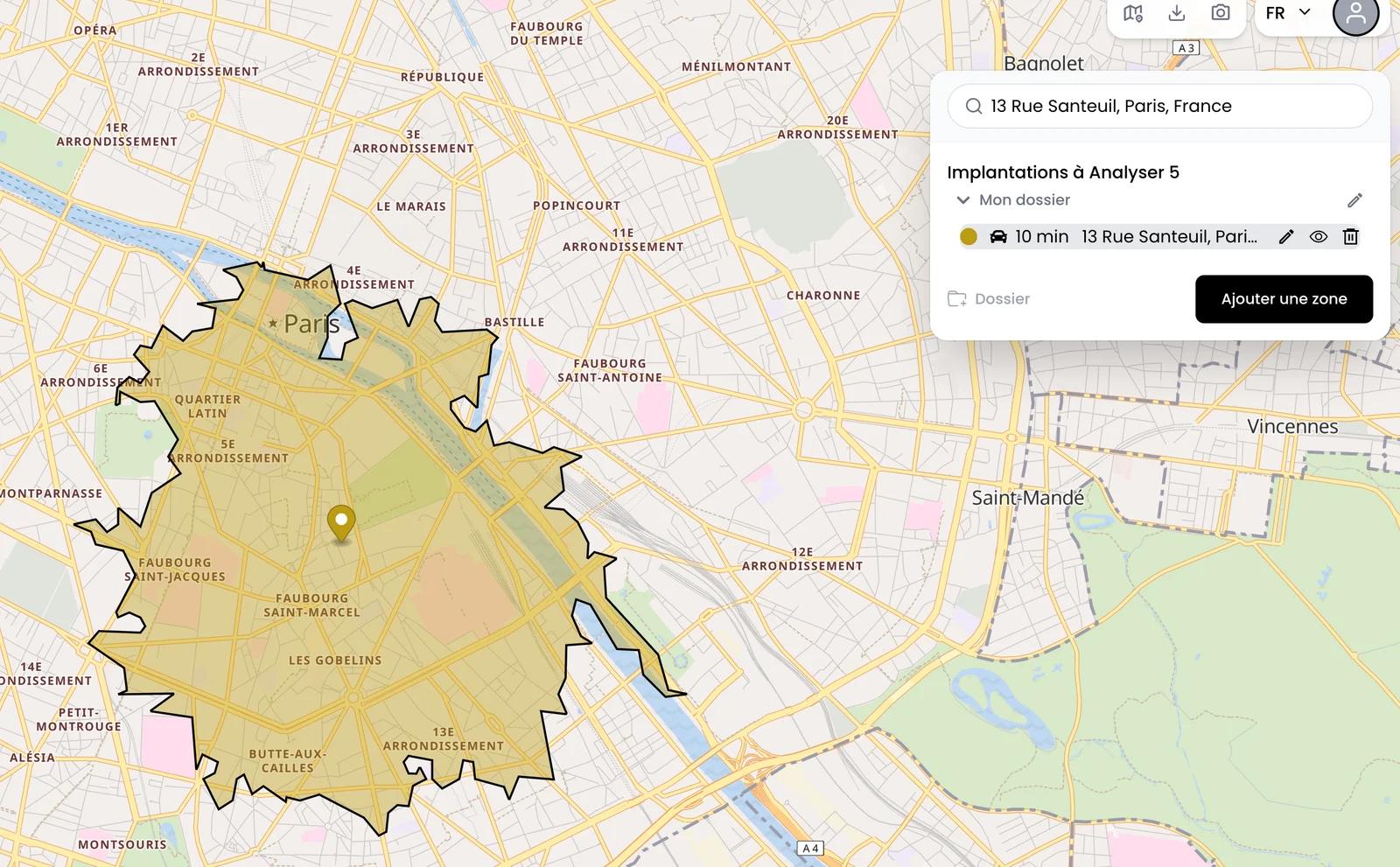
Draw an isochrone (drive, walk or cycle time), an administrative boundary — municipality, IRIS, postcode — or a freehand polygon. Customers think in minutes, not kilometres: one kilometre as the crow flies can be twelve minutes of real driving behind a railway line.
- Étape 2
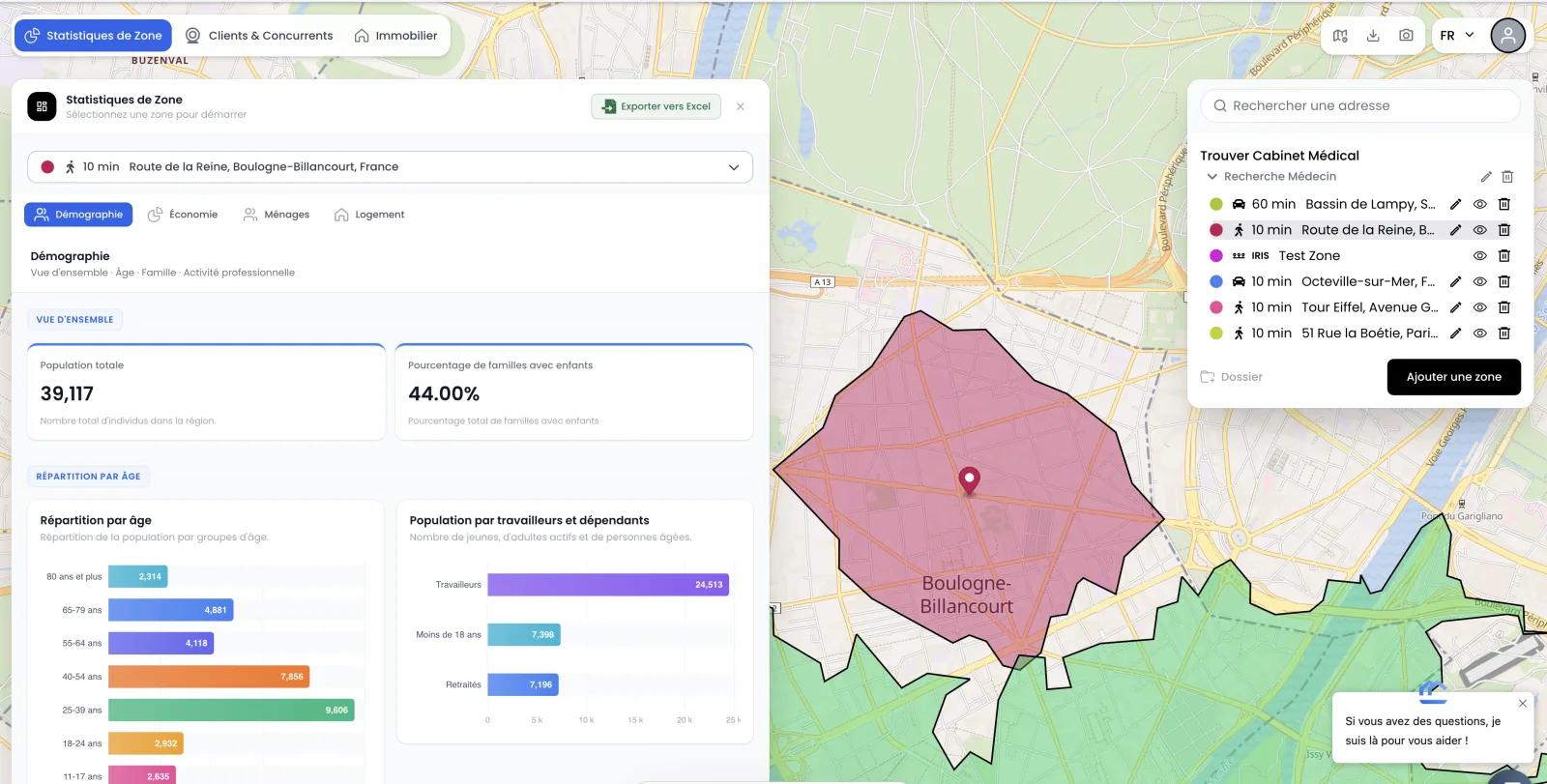
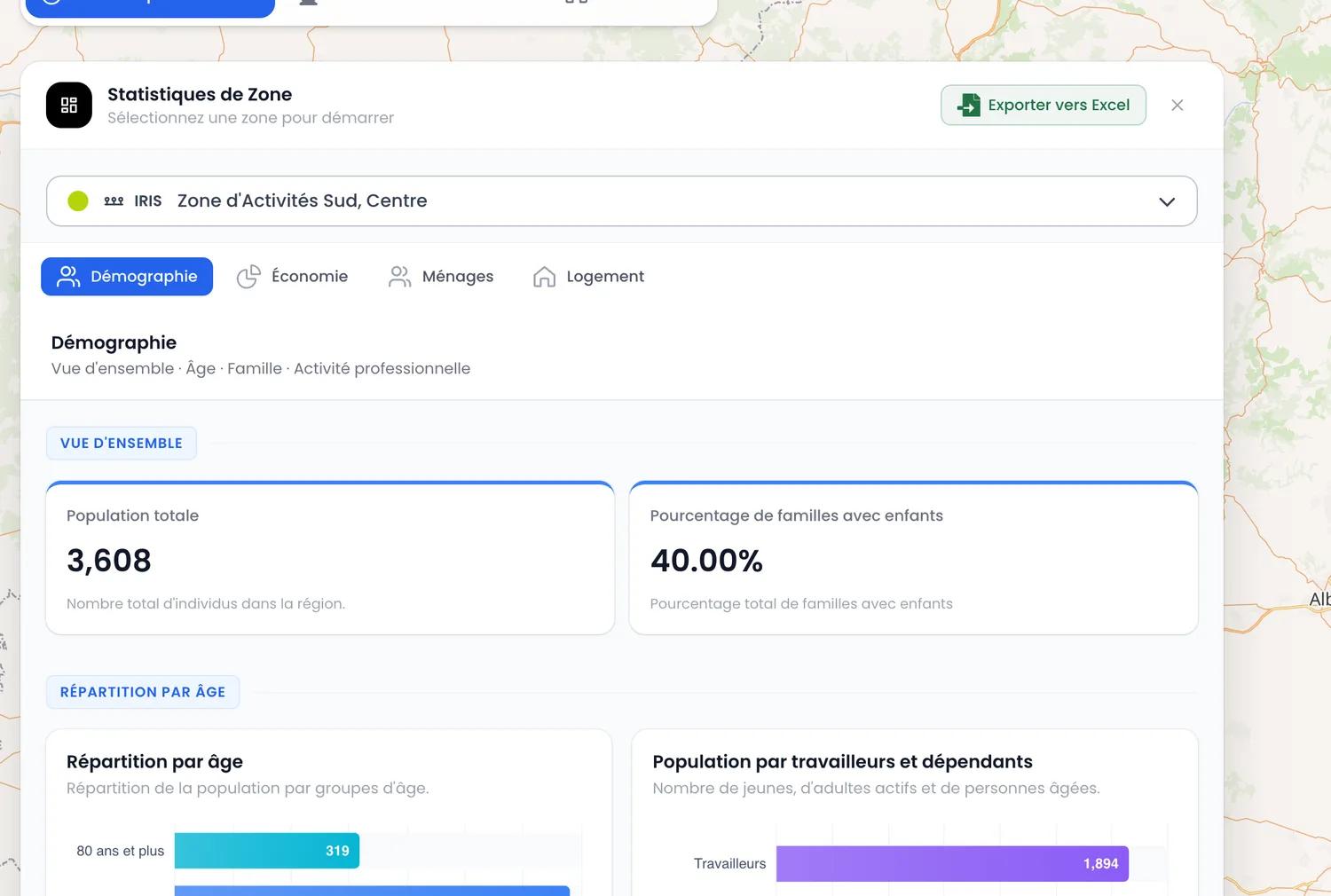
Demand: measure the population on that perimeter
Population, households, disposable income, socio-professional categories, household composition and housing, aggregated on the exact area from INSEE data. Analysing a whole municipality when customers come from six streets averages three micro-markets that never meet.
- Étape 3
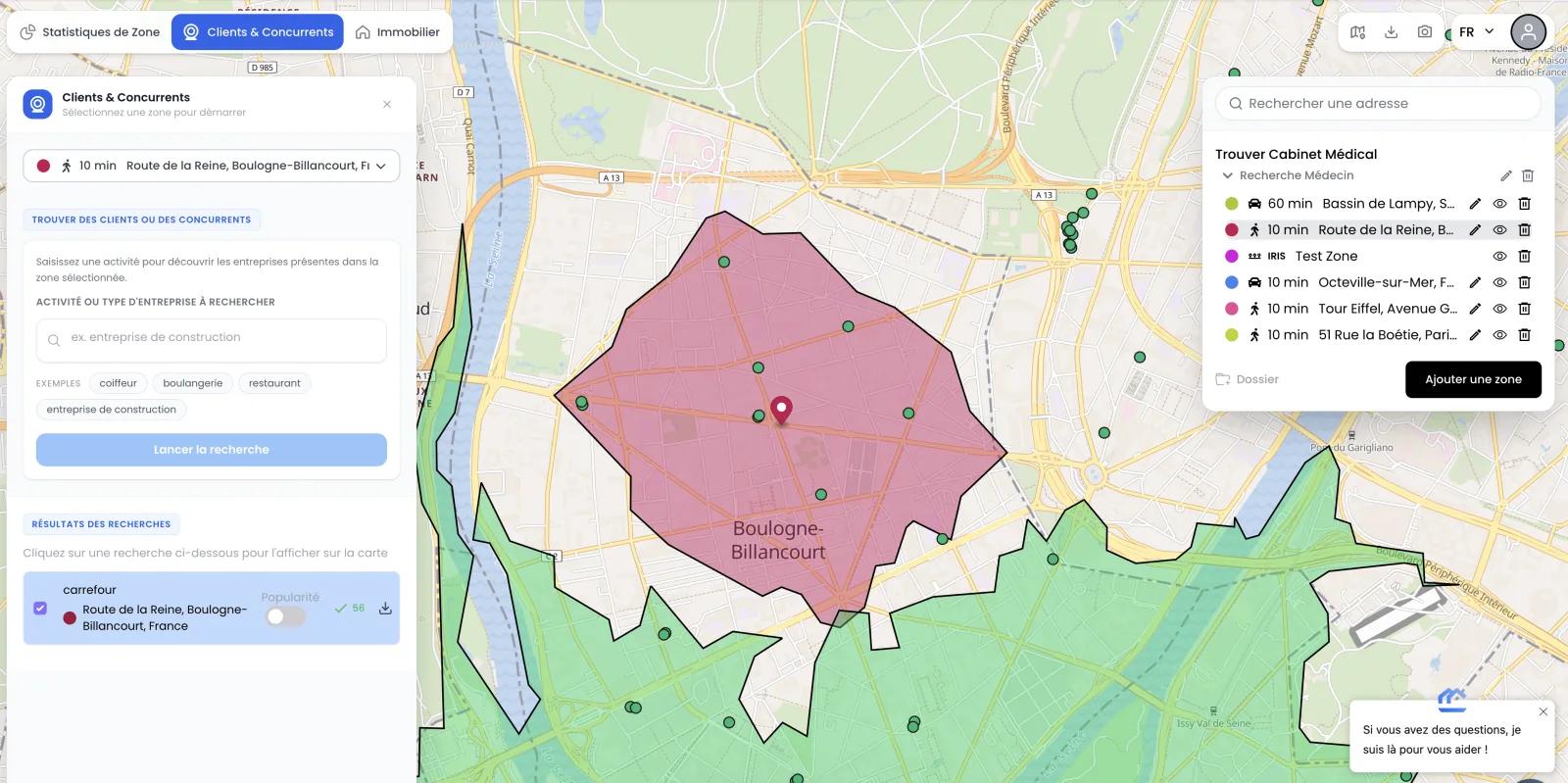
Competition: subtract the supply already in place
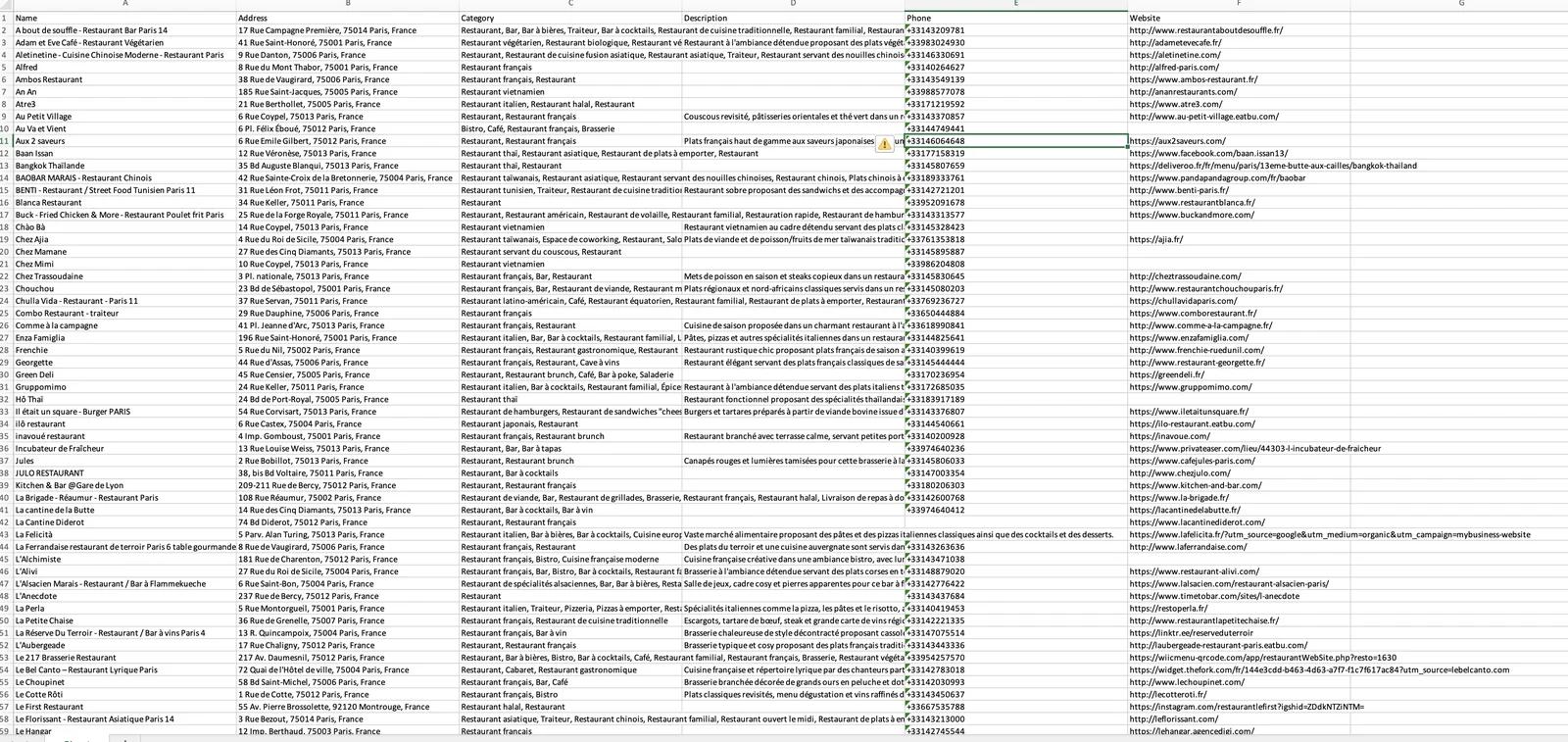
List the businesses in that category present in the area, with their Google rating and review count, exportable to Excel. A market of 15,000 people with six established competitors is often worth less than one of 8,000 held by a single ageing operator.
- Étape 4
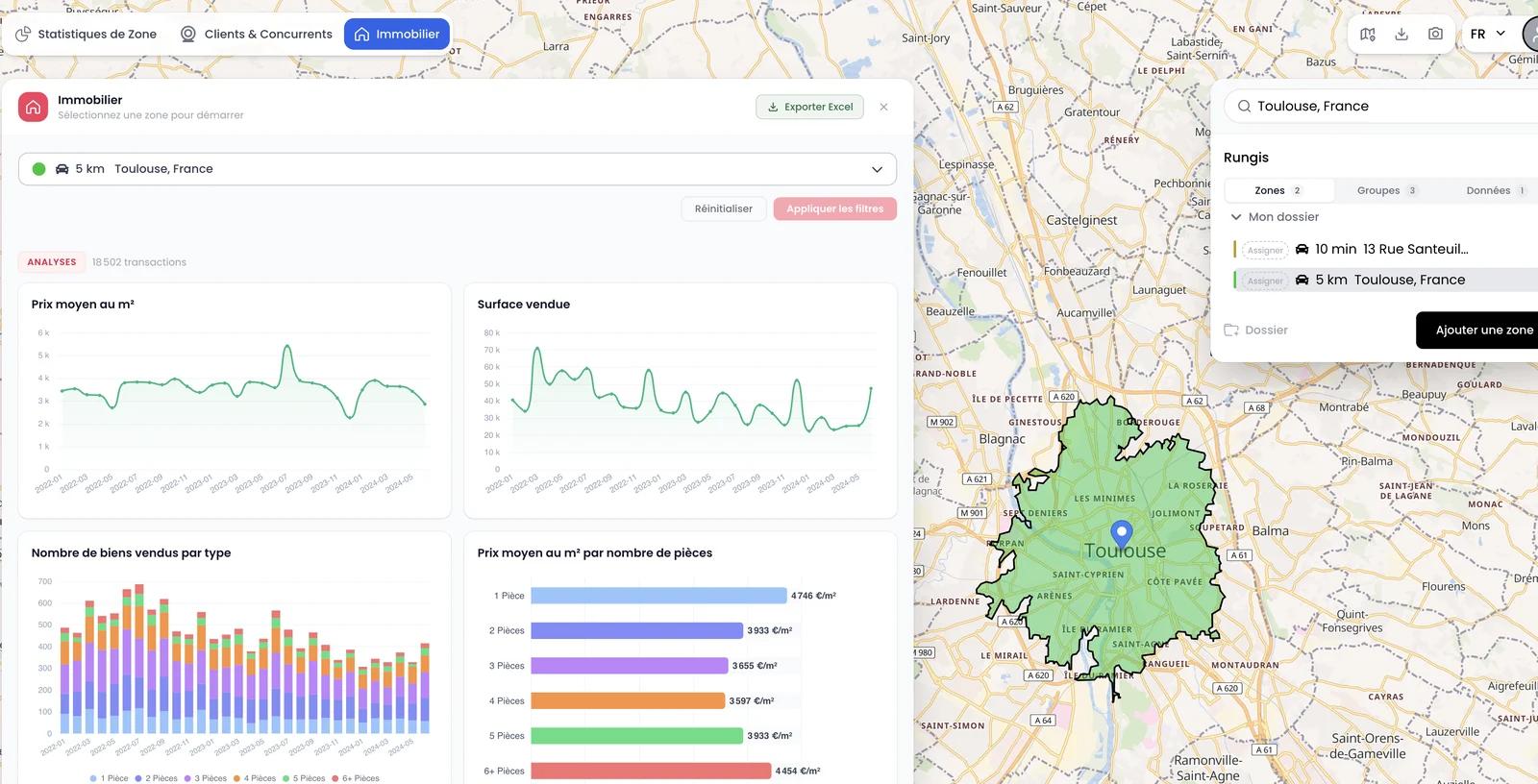
Property cost: check the price of entry
Average price per m², transaction volume and trend for the area, from actual DVF transactions published on data.gouv.fr. Commercial rents follow sale prices with a lag, which makes the trend as useful as the level.
Three locations on one identical grid
The real benefit of a tooled study: several units assessed on the same criteria, rather than one file built to justify a favourite.
- 1One identical outline for all threeSame travel mode, same duration. Without that constraint, the gap between two areas mostly reflects how they were drawn.
- 2The same indicators, column by columnPopulation, households, disposable income, socio-professional categories, competitor density and price per m² for each candidate.
- 3The criterion that decidesRarely raw population — far more often disposable income, or the number of competitors already in place.
Official data, on your exact area
Public sources aggregated on the perimeter you draw, each one named — the first thing a lender or a franchisor will check.
INSEE Filosofi
200 m grid
Disposable income and living standards. The reference for qualifying an area's purchasing power.
INSEE Households & Housing
IRIS
Household composition, presence of children, tenure status and housing type.
DVF
data.gouv.fr
Actual property transactions: price per m² by property type, volumes and trend.
Google Maps
On demand
Businesses of a given category present in the area, with rating and review count.
Your own data
Imported by municipality
Revenue, customers or estimated potential, automatically aggregated on every area you study.
What you get
Excel tables and map captures, quantified and sourced. The tool does not produce a PDF or Word report: writing the file remains your work.
What this study does not do
A stated limit is worth more than a promise the file will not survive in front of a lender.
- It does not replace the site visit: the state of the unit, shopfront visibility and parking are not in the data.
- It does not count footfall. No visit or pedestrian-flow figure is measured by the tool.
- It does not produce a financial forecast: revenue projection, break-even and funding plan still have to be built.
- It has no legal or regulatory standing and is not a certified local market assessment.
Frequently asked questions
How long does a study take?+
A few minutes per location once the method is set, against half a day by hand. That is what makes it possible to compare three or four units before choosing, rather than assessing only one.What formats can I export?+
Excel for tables and the business list, image for the map. There is no automatic PDF or Word report generation.Where does the data come from, and from when?+
From official public sources: INSEE for demographics and income, DVF for property prices, Google Maps for businesses. Each indicator names the database it comes from.Can I reuse my areas from one study to the next?+
Yes, that is the main point. Areas are saved and grouped into folders: 10 saved areas on the free plan, unlimited on Growth.How much does it cost?+
The Growth plan is €49 excl. VAT per month, no commitment. The free plan lets you test the method on a real area, with no card required.
Go further
- FeatureArea demographic analysis
- FeatureMap local competitors
- PricingFree and Growth plans compared